
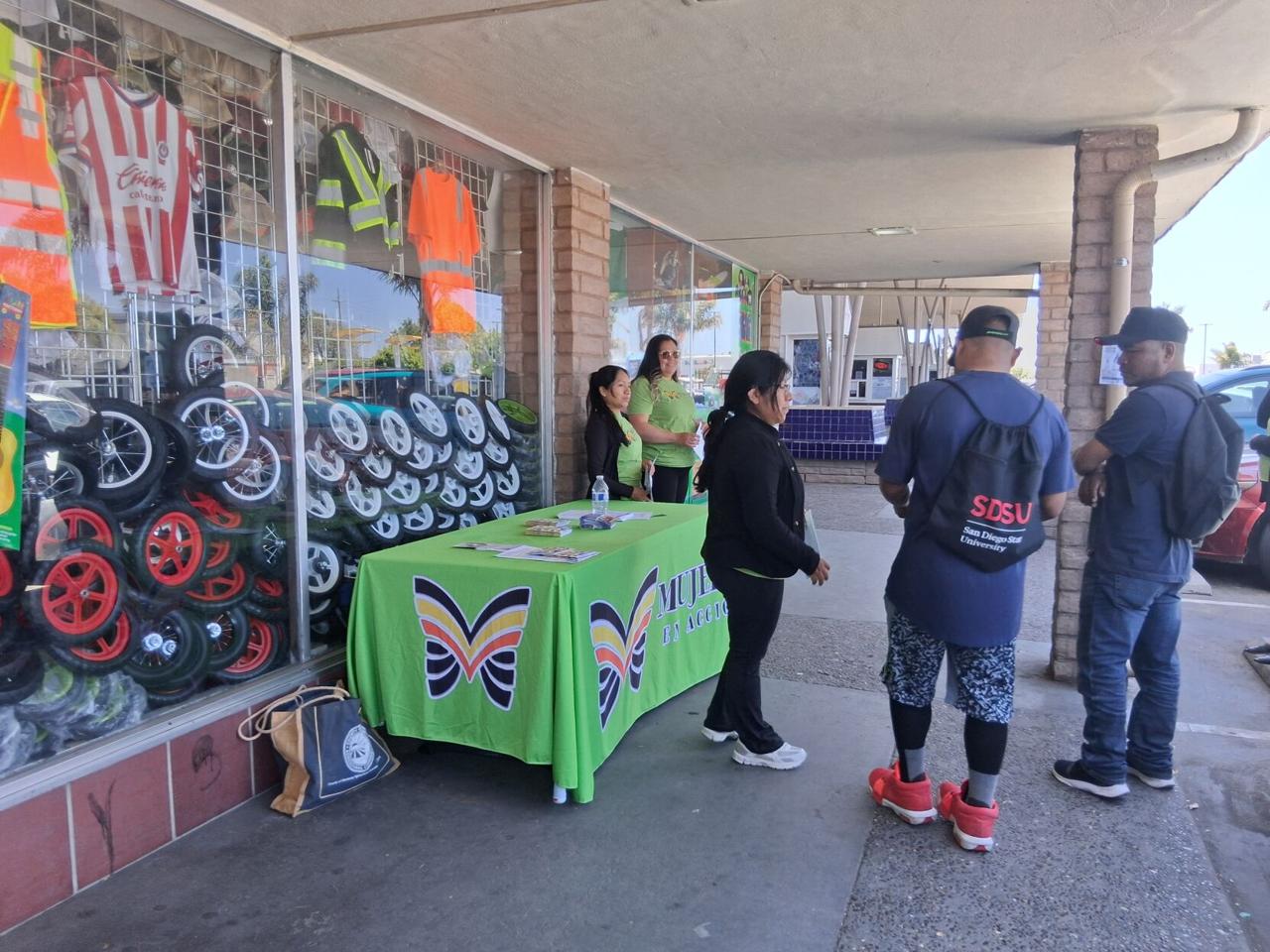

A few women are tabling outside Los Mercados in East Alisal in Salinas, all community health workers for Mujeres en Acción.
Their goal is simple—to reach out to agricultural workers during lunch time in sharing information about workers' rights through the California Workplace Outreach Project. This undertaking is funded by the California Department of Industrial Relations.
Mujeres en Acción, founded in 2015, offers resources and learning opportunities to women across Monterey, Santa Cruz and recently San Benito counties. These community health workers table three to four times a week throughout Salinas and south county areas, on educating vulnerable and high-risk workers about workplace safety, labor rights and wage protections.
“We reach out to more than 10,000 workers a year,” says Mujeres en Acción Program Coordinator María Rodríguez.
During the week these women table from 9-11am around bakeries and 1-4pm near stores and libraries and on Sundays at churches beginning at 7am. A few times a year they also table in resource fairs or other community events.
One of these health care workers, Adriana Santana, was once in these workers' shoes. She says she wants to help those who she can relate to and make sure they get the resources she wished she had when she worked in the strawberry fields.
“Back when I worked in the strawberry fields, anything more than 10 hours was considered overtime and sometimes I would work past those hours without getting paid,” Santana says. “These companies abuse these workers and it still happens in terms of production, they pressure you to do more than you can do.”
Veronica Martinez, who also works in the outreach program and labored in the strawberry fields around 2011, says some companies pay these workers per box rather than per hour.
“The companies would ask for seven boxes an hour back when I worked in the field and if you didn't meet that requirement they would mark you down, and if they mark you a second time they would fire you,” Martinez says. “In order to make sure you met the requirements, sometimes I wouldn't take a break or go to the bathroom to pack enough boxes.”
Strawberry season begins in April and ends around October and according to Martinez, it can be harder to meet those requirements outside those seasons. She also speaks the Mixtec language, an indigenous Mesoamerican language spoken by many in Oaxaca, Mexico.
“I see the need for what we do and that motivates me especially to help the Mixteco community,” she says. “Many don't know how to read or write and I love to help them also through the phone after their work hours, speaking in their native language to make them feel more comfortable.”
Both Martinez and Santana share that many workers fear retaliation if they speak up or take action of any form from abuse at work. This is why they make sure to help these workers understand it's important to take action regardless of their immigration status.
A member of the community, who was walking by and was interested in learning more information, says he’s been working in the fields for 43 years.
"I’m not afraid to speak up, but in the end I’ve seen that too many people’s pride is too big for them to be willing to speak up,” he says. “And even if I voice my concerns I can’t count on my colleagues for help.”